Property Investment
Guide to residents' associations and body corporates
Learn what the main difference is between the two, and what each will cover in terms of your investment property.
Property Investment
6 min read


Author: Jess James-Davies
Business Development Manager with over 5 years of experience in Property Management in Auckland.
Reviewed by: Tiffany Bracey
Property Manager Team Leader at Opes Property Management Auckland.
A Residents’ Association (RA) is the group that looks after the shared parts of a townhouse development.
We’re talking things like driveways, gardens, and rubbish areas.
If you buy a townhouse in a new development, there’s a good chance you’ll be part of one.
For most people, the first reaction is: “Great (trigger eye-roll). Another fee”.
And fair enough. It can feel like just one more cost piled on top of your mortgage, rates, insurance, and everything else that comes with owning property.
But in most townhouse developments, it’s the thing that stops the whole place from slowly turning feral. Without it, the shared areas can quickly become everyone’s problem and no one’s responsibility.
In this article, you’ll learn how a Residents’ Association differs from a Body Corporate, and what being part of one means for you.
A Residents’ Association and a Body Corporate are similar, but they are not the same.
From a practical point of view, both exist for the same reason: to manage shared parts of a development.
Body Corporates are more common in apartment buildings and are compulsory for unit title properties.
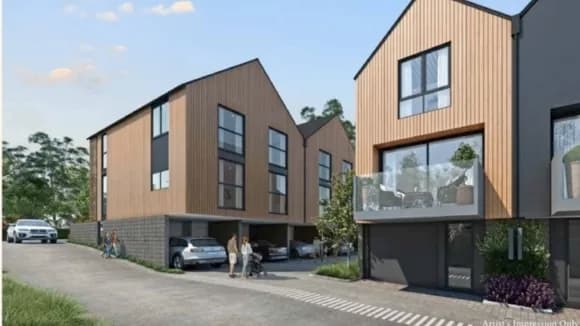
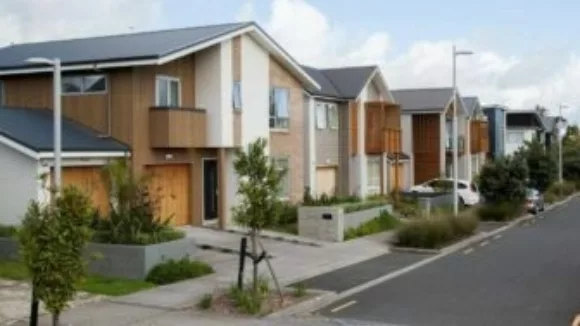
A Residents’ Association is more common in townhouse developments. That’s because you own your own home and the land beneath it. But you still share things like driveways, a wall and a garden with your neighbours.
| Residents’ Association | Body Corporate |
| More common in townhouse developments | More common in apartments and unit title properties |
If you don’t have a Residents’ Association, it can be hard to manage the common areas in a development when something goes wrong.
Let’s say a development of 50 townhouses all share the private road. If something happens to that road, whose responsibility is it to pay for it?
This isn’t a niche issue anymore. Cotality says townhouses now make up 45% of all new dwelling consents across New Zealand.
So, more buyers are purchasing in developments where shared rules matter.
Now, in theory, you could have a small development where everyone gets on, is reasonable, and is happy to chip in when something needs doing.
In reality, that’s a stretch.
All it takes is one owner who doesn’t want to pay for a cracked driveway and suddenly everyone is annoyed. And worse, nothing gets fixed.
That’s why Residents’ Associations work especially well in larger developments. Particularly where there’s a mix of owners, tenants, and investors.
It’s my job, as a property manager, to look after the inside of an investment property. But the Residents’ Association has more responsibility for the outside. Specifically, the shared spaces, the appearance of the complex, and the rules that keep everyone in line.
In my experience, a Residents’ Association levy that includes shared house insurance will often sit around $2,000 to $3,000 a year.
Here’s an example of what a Residents’ Association in Auckland covers:
[Insert screenshot/example of levy breakdown here]
In this case, the levy was about $2,700 a year, or roughly $225 a month.
For context, standalone house insurance in Auckland can easily cost around $2,000 to $2,500 a year on its own.
Of course, that depends on the property, insurer, and excess.
This helps explain why a Residents’ Association levy can look high … and why some owners still see it as an extra cost they’d rather avoid.
Levies can also rise over time. Especially if insurance costs go up or bigger maintenance works are coming.
To put that in context, here’s how the fixed annual costs can look for a standalone Auckland home compared with a New Build townhouse:
| Cost | Standalone Auckland house | Auckland New Build townhouse |
| Rates | $4,069/year * | $2,200/year |
| House insurance | About $2,000–$2,500/year | Included in RA levy |
| Residents’ Association fees | — | $2,700/year |
| Total fixed annual costs shown | About $6,069–$6,569/year | $4,900/year |
This is only an illustration, not a perfect like-for-like comparison.
But it shows why a Residents’ Association levy can look high while still covering costs a standalone owner would often pay separately.
A well-run Residents’ Association shouldn’t just react to problems. It should plan for them.
That’s why many developments have both a short-term maintenance fund and a long-term maintenance fund.
| Short-term maintenance | Long-term maintenance |
gardens gate latches rubbish bin lid routine upkeep | resealing the driveway major shared maintenance over time |
A common complaint is: “Why am I paying for something that might not happen for 10 years if I only plan to live here for five?”
The answer is simple: because you used it for those five years too.
If you’ve lived there, you’ve driven on the driveway and contributed to the wear and tear. So, it makes sense to contribute during the time you own the property.
Generally, the developer will organise the Residents’ Association. When you buy the property from the developer, joining that structure is usually a condition of purchase.
In many cases, the Residents’ Association is then managed by an external company, often appointed by the developer at the start.
In Auckland, specialist firms that manage Residents’ Associations include:
The professional management company then reports to a Residents’ Association committee. This is made up of owners in the development who have put themselves forward.
To get on the committee, you typically get elected at the Annual General Meeting (AGM).
These AGMs are held once a year, often over Zoom.
They cover the standard topics like levies and any upcoming maintenance such as building washes, and standard owner queries.
Annual General Meetings are not compulsory to attend. Plenty of people don’t.
Usually, there are a few owners who get really involved, and a lot of others who are happy to let them handle it.
That said, there’s a strong argument for showing up … or at least logging in. Because if you don’t vote, it’s pretty hard to complain later about the decisions that get made.
These days, many meetings are online and often done within 45 minutes, so while they’re not exactly fun, they’re usually not a huge time commitment either.
If a townhouse development doesn’t have a Residents’ Association, that doesn’t mean the common areas are unmanaged.
Instead, the rules are usually built into the property title through something called land covenants.
Land covenants are legally enforceable rules that tell owners what they can and can’t do, and they can cover things like:
The important thing is that these covenants don’t just apply to the first buyer. They stay on the title and usually apply to future owners as well.
That means the protections remain in place even after the property is sold.
So, if you’re looking into a townhouse without a Residents’ Association, it’s important to ask your solicitor to explain:
So, even without a Residents’ Association, there are still legal ways to manage shared responsibilities.
A Residents’ Association is one of those things that can feel annoying right up until you see what life looks like without one.
But if you own in a townhouse development with:
A Residents’ Association is often what keeps the whole thing working.
It protects maintenance from being ignored and it helps stop neighbour disputes from spiralling.
Business Development Manager with over 5 years of experience in Property Management in Auckland.
Jess Knight is the Business Development Manager at Opes Property Management in Auckland. She has over five years of industry experience and is also an experienced property investor.
This article is for your general information. It’s not financial advice. See here for details about our Financial Advice Provider Disclosure. So Opes isn’t telling you what to do with your own money.
We’ve made every effort to make sure the information is accurate. But we occasionally get the odd fact wrong. Make sure you do your own research or talk to a financial adviser before making any investment decisions.
You might like to use us or another financial adviser