
Property Investment
What is your dream retirement?
Half of Kiwis don’t have a retirement plan. I think I know why. So, next week, I’m doing something about it. Here’s what we’re launching 👇
Property Investment
2 min read


Author: Andrew Nicol
Founder, 20+ Years' Experience Investing In Property, Author & Host
Lots of investors are asking: What’s happening in Iran? And what’s it going to do to the cost of living and interest rates?
Because when petrol prices jump, it can push the cost of everything else up.
Could that cause the Reserve Bank to increase interest rates? Well, the answer isn’t as simple as you might think.
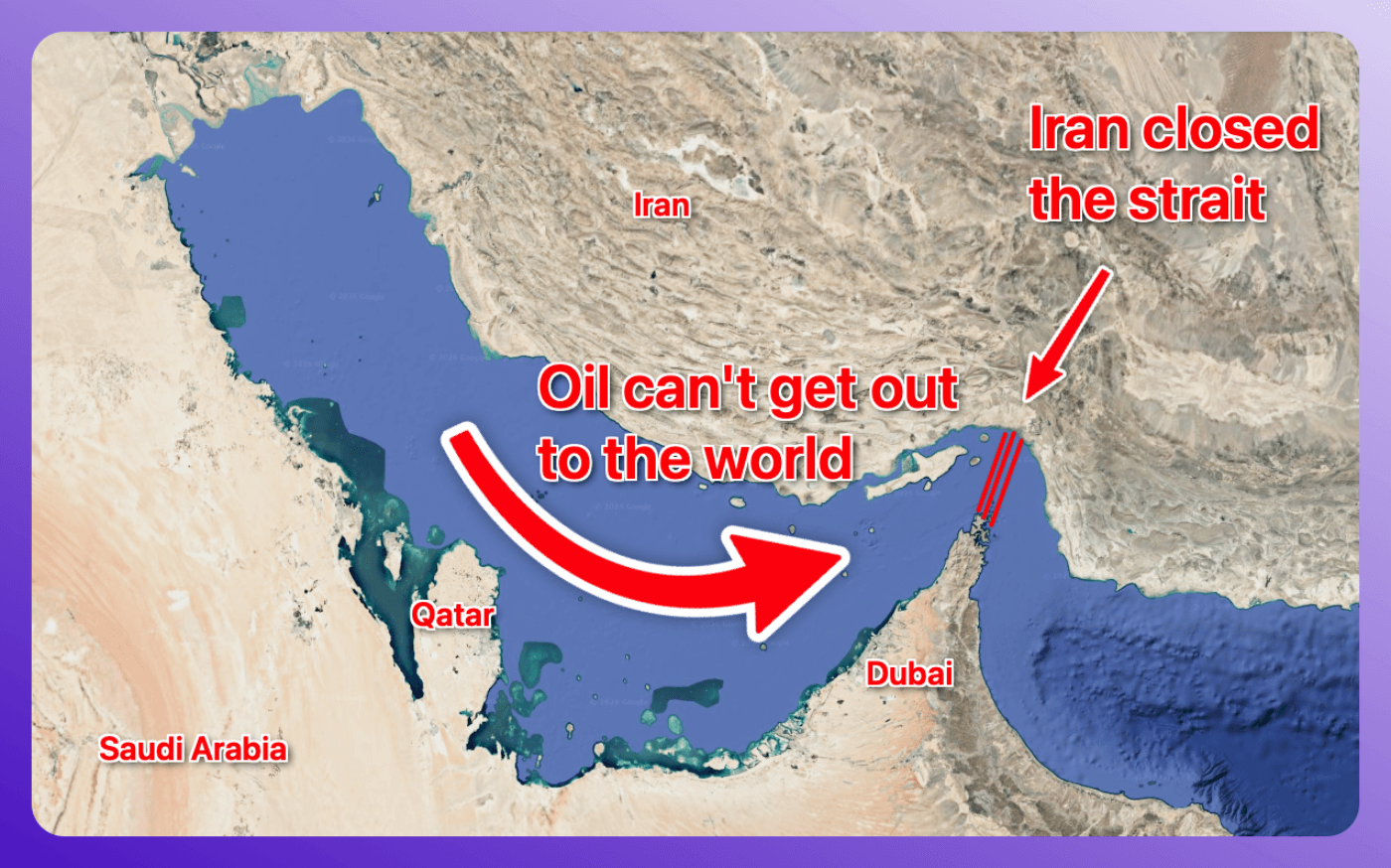
The US and Israel attacked Iran on the last day of February. So Iran responded by attacking ships that go through a tiny stretch of water called the Strait of Hormuz.
That strait is not that much bigger than the Cook Strait. But 20% of the world’s oil goes through it.
But since oil ships aren’t going through it (for fear of attack), a whole heap of the world’s oil is stuck and can’t get out to the world.
Demand for oil hasn’t changed. Supply has gone down. That’s why the price of crude oil jumped from roughly US$70 a barrel to US$110.
And that’s why Kiwi drivers are suddenly staring down these prices since the start of the month:
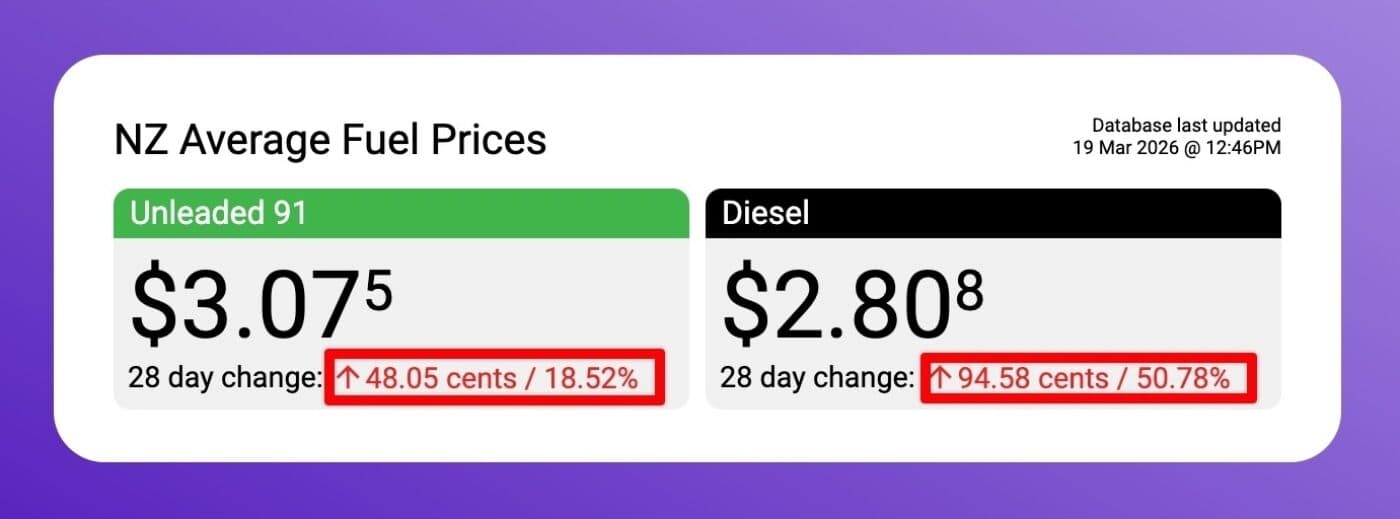
When fuel gets more expensive, everything else gets more expensive too.
It takes fuel to get food from farmers to the supermarket. It takes fuel to ship what you see on most store shelves from overseas to our ports. It takes fuel again to get that stuff from the ports to the shops.
When transport and freight costs rise, those costs flow through the whole economy.
So, the risk here is that higher oil prices flow through into higher inflation. And if that happens, the Reserve Bank could hike interest rates to get inflation down.
After all, NZ inflation is already sitting at 3.1%. Outside the Reserve Bank’s 1% to 3% target band.
The Reserve Bank probably won’t jump to increasing interest rates straight away.
Because higher inflation doesn’t always lead to a higher OCR.
Over the last year, inflation rose from 2.2% to 3.1%. At the same time, the OCR fell from 4.25% to 2.25%.
How does that happen? Because the Reserve Bank doesn’t just look at where inflation is today. It looks at where inflation is likely to go next.
When inflation is driven by an oil shock, the Reserve Bank’s usual playbook is to “look through it”.
Because raising the OCR in Wellington won’t reopen the Strait of Hormuz.
It won’t get more oil onto ships. And it won’t bring inflation down overnight. Because it takes time for an OCR increase to flow through the economy and stop the cost of living from going up so fast.
By the time that happens … the strait could be back open and oil prices lower.
Westpac’s rule of thumb is that every US$10 increase in the oil price adds about 0.1% to 0.2% to inflation in New Zealand.
So, if oil is up about US$40 a barrel, that implies roughly 0.4% to 0.8% extra inflation.
Inflation had been forecast to ease to about 2.6% by June. Add the extra inflation, and suddenly you’re back at roughly 3.0% to 3.4%.
So some more inflation. But not as much as you might think.
That’s why the Reserve Bank has to weigh up two competing risks:
So expect the OCR to stay where it is for at least a few months. We’re unlikely to get a knee-jerk increase.
Founder, 20+ Years' Experience Investing In Property, Author & Host
Andrew Nicol, Managing Director at Opes Partners, is a seasoned financial adviser and property investment expert with 20+ years of experience. With 40 investment properties, he hosts the Property Academy Podcast, co-authored 'Wealth Plan' with Ed Mcknight, and has helped 1,894 Kiwis achieve financial security through property investment.
This article is for your general information. It’s not financial advice. See here for details about our Financial Advice Provider Disclosure. So Opes isn’t telling you what to do with your own money.
We’ve made every effort to make sure the information is accurate. But we occasionally get the odd fact wrong. Make sure you do your own research or talk to a financial adviser before making any investment decisions.
You might like to use us or another financial adviser


