
Property Investment
A $194-a-week tax cut for landlords?
A new election promise could put an extra $194 a week in some landlords' pockets. Here's how👇
Property Investment
3 min read


Author: Andrew Nicol
Founder, 20+ Years' Experience Investing In Property, Author & Host
Last week I was sitting down with an investor who said:
“I wish I’d never invested in property. I would’ve made more money if I’d just put my money into the S&P 500.”
It’s true that shares have had an incredible run. Property hasn't – not over the last few years.
But there’s a trap in this type of thinking. Here’s why 👇
Over the last 10 years, New Zealand property prices have increased by around 3.7% a year (QV).
The S&P 500 has returned around 13.1% a year.
That's a massive difference.
But there's something important missing from those stats: Where each investment is currently within its cycle.
For instance, let’s say you were investing in property in November 2021. That was right at the top of the Covid-19 boom.
You could have looked back over the last decade and said, “Property has gone up by 10.2% per year!”
But if that was you back then, you shouldn’t think that will necessarily continue – you’re measuring the returns at the top of the market.
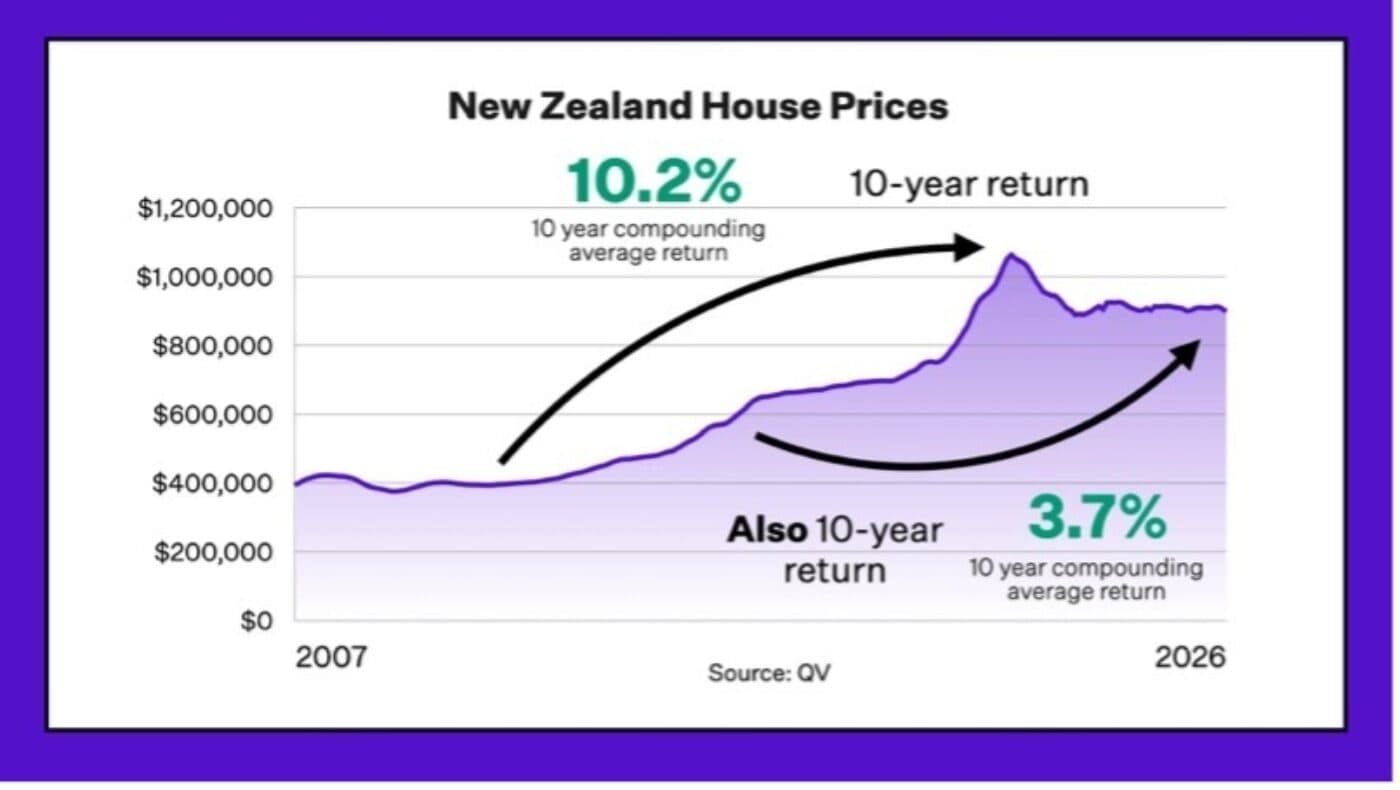
If you do the same exercise today, you’d see that property prices have only gone up 3.7% per year.
But don’t make that same mistake, thinking that this is exactly what we’ll get in the future, because we’re now measuring it at the bottom of the market.
The S&P 500, on the other hand, is at an all-time high.
Over the last 10 years, it has delivered over 13% per year (compounding average).
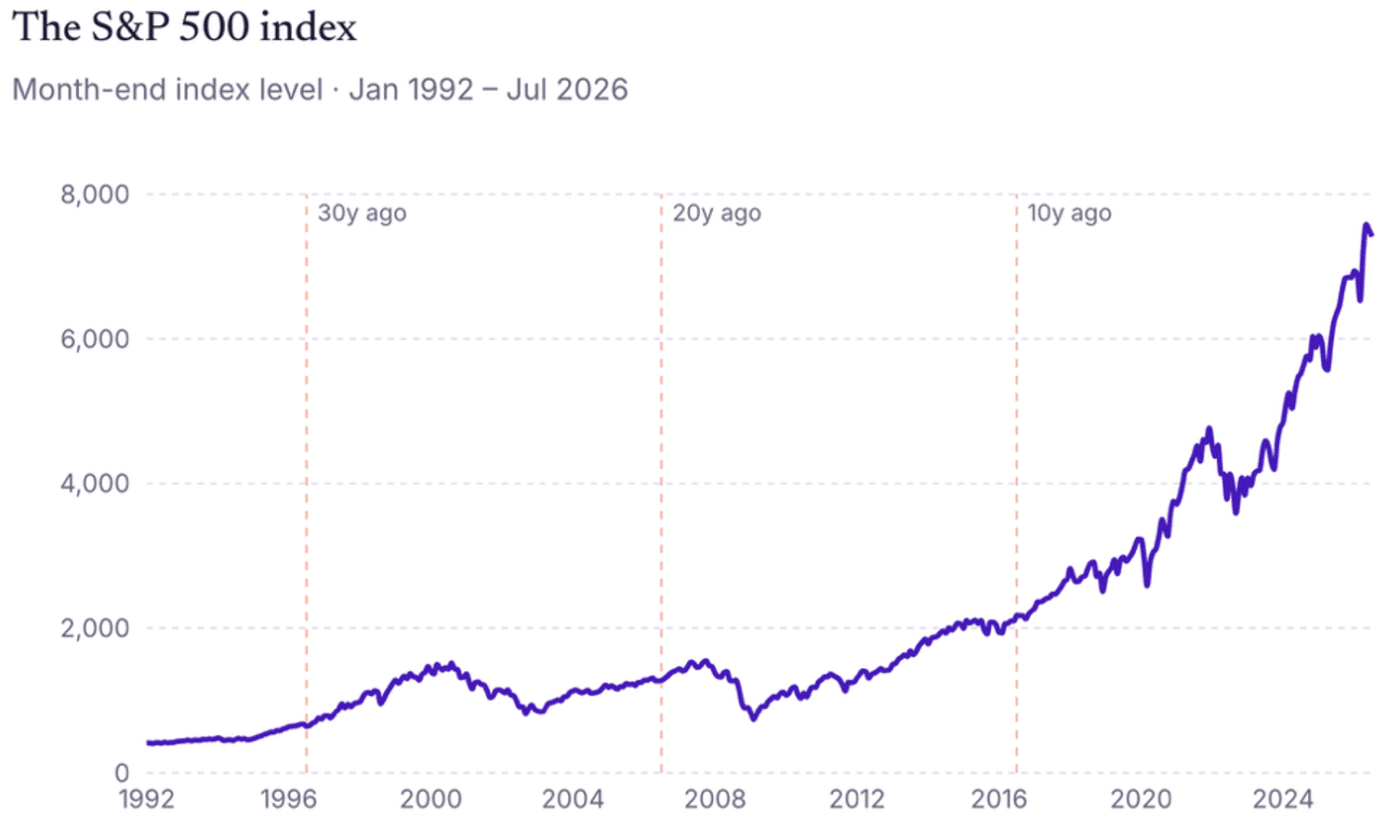
But there is a danger in lining up two assets … and only comparing them based on the last 10 years.
That’s because those assets can be at very different parts of their cycle.
So how do you combat these cyclical trends? I like to take a wider view and ask:
What might the return have been?
58% of the time property delivered at least 6.5% (on average) per year.
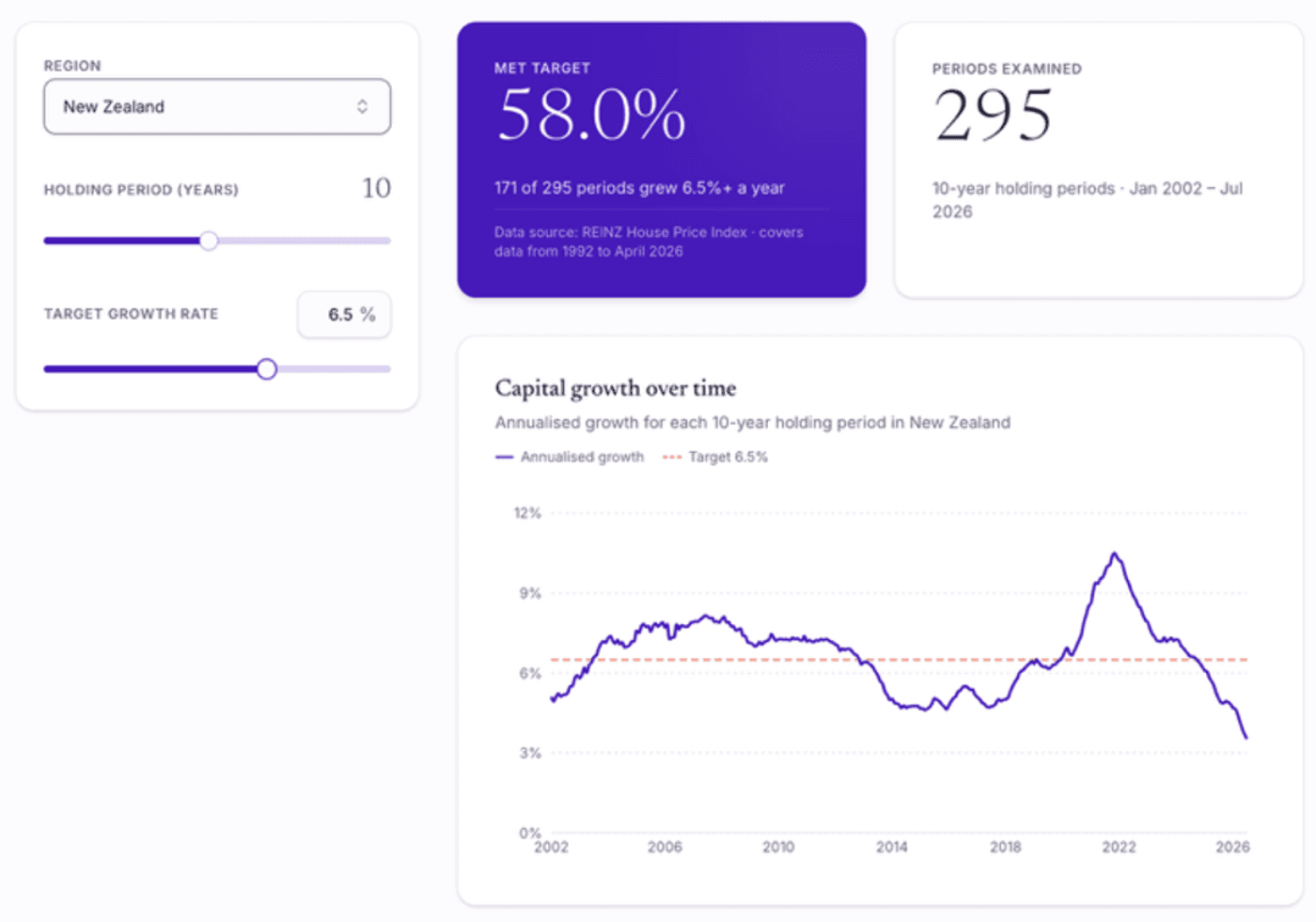
So a return this low has only happened about 1% of the time.
So the current property returns are unusually bad. It’s only been this bad 1 out of 100 times.
Use this calculator to play with the data yourself.
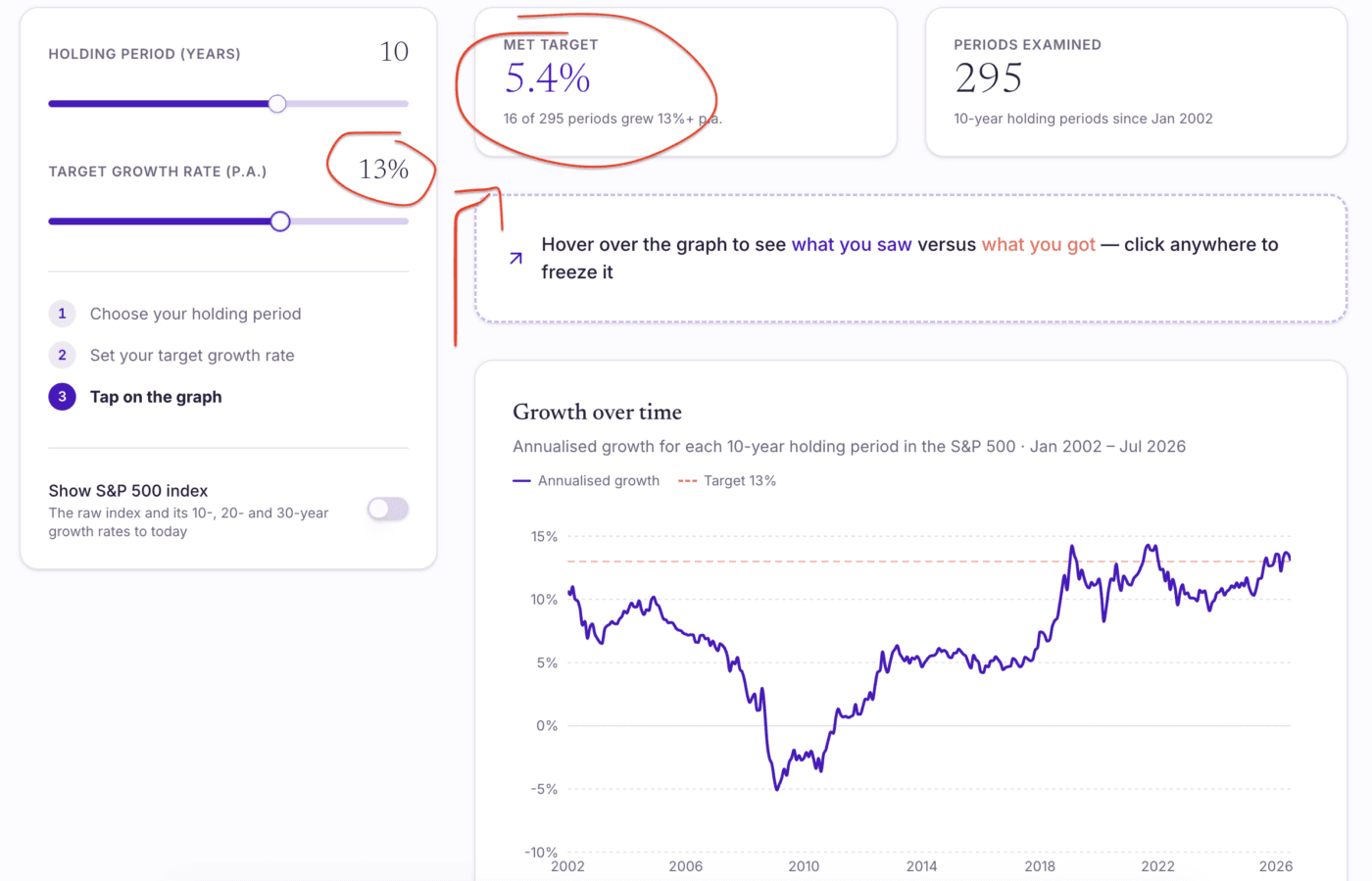
The S&P 500 has returned around 13.1% a year over the last 10 years.
That's an incredible result. But it's also unusual.
Across the same timeframe, the S&P 500 only returned 13%+ a year 5.4% of the time.
The current returns are unusually good.
And you can use this calculator to play around with the S&P 500 data too.
Keep in mind that it can be difficult to compare property and shares consistently. So I’ve deliberately left out rents and dividends.
So these calculators just show capital growth. That’s to make it a like-for-like comparison.
Right now, we're measuring:
But be very careful assuming today's returns will continue forever.
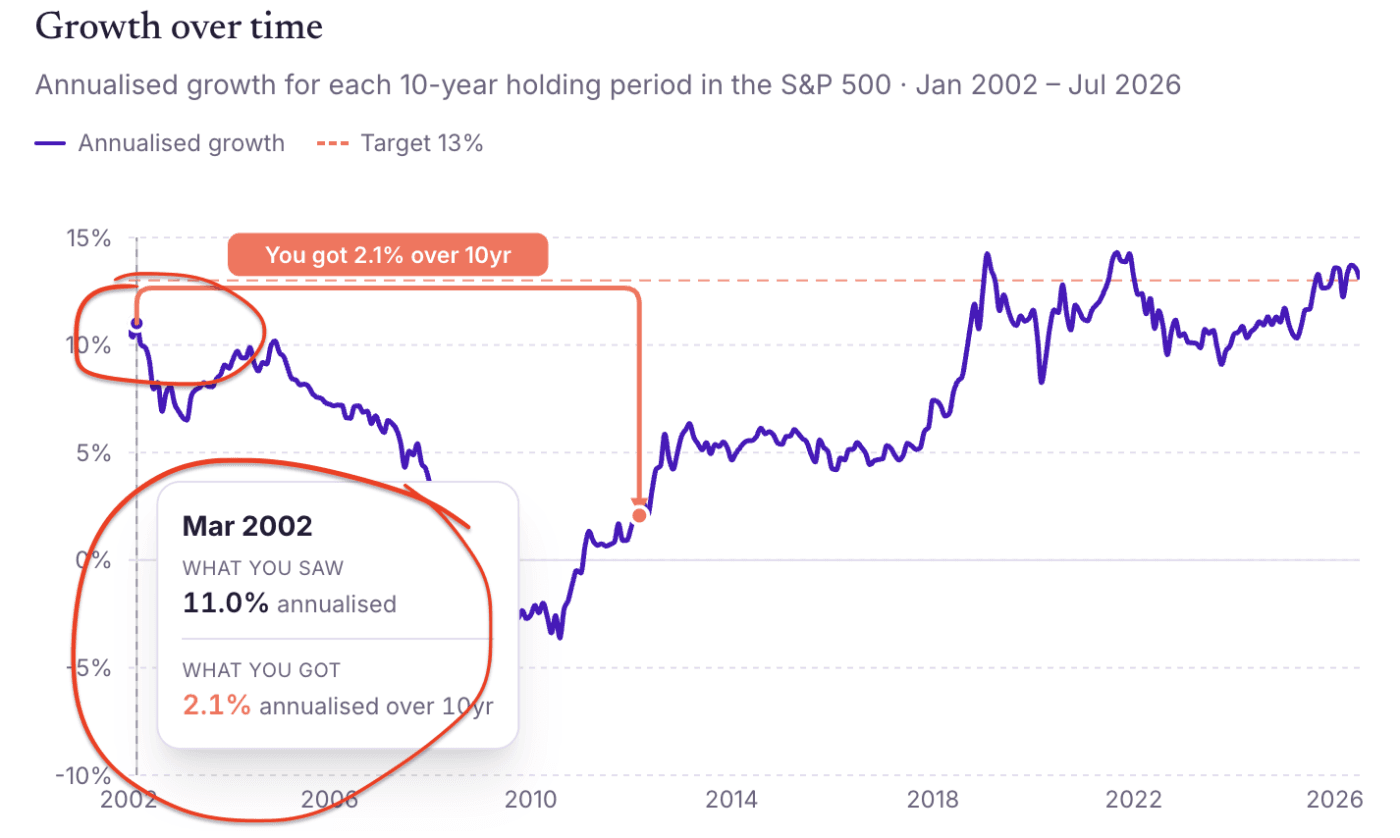
If you were investing in shares in March 2002, you would have seen an 11% return and thought: “Great, that's what I'm going to get.”
But hold for 10 years, and that same investment actually returned just 2.1% a year.
And property can move the other way, too.
Its recent returns are unusually low.
That doesn't mean they'll stay that way forever, either.
Now, I’m not saying we're about to get a share market crash. I'm not saying a property boom is imminent.
I'm simply trying to point out that assets are cyclical. Their prices go up and down.
And investors make a big mistake when they think that whatever is happening right now … is going to keep happening in the future.
Founder, 20+ Years' Experience Investing In Property, Author & Host
Andrew Nicol, Managing Director at Opes Partners, is a seasoned financial adviser and property investment expert with 20+ years of experience. With 40 investment properties, he hosts the Property Academy Podcast, co-authored 'Wealth Plan' with Ed Mcknight, and has helped 1,894 Kiwis achieve financial security through property investment.
This article is for your general information. It’s not financial advice. See here for details about our Financial Advice Provider Disclosure. So Opes isn’t telling you what to do with your own money.
We’ve made every effort to make sure the information is accurate. But we occasionally get the odd fact wrong. Make sure you do your own research or talk to a financial adviser before making any investment decisions.
You might like to use us or another financial adviser


