New Builds
Do townhouses take longer to sell?
Learn how long townhouses take to sell. You’ll also learn whether the size of the development makes a difference.
Property Investment
8 min read


Author: Dennis Schipper
Financial adviser for 3+ years. Helped nearly 500 Kiwis buy property.
Reviewed by: Louis Fraysse
Louis is a registered financial adviser with an MBA from Massey University.
A good investment property earns the right yield, sits in a growing area, and matches your overall investment strategy.
That’s based on my professional opinion as a financial adviser and property investor. And also the analysis shared below.
The problem is that many people start investing in property the wrong way around.
They jump onto Trade Me, scroll through listings, go to open homes, and only then ask themselves: "Is this a good investment property?"
It's the wrong question. Unfortunately, there isn't a good investments category on Trade Me.
A new townhouse in Christchurch could be a worthy investment for one person ... and a terrible one for someone else.
Likewise, an old villa in need of a renovation could be exactly what another investor is looking for. But unsuitable for another.
The strategy decides whether a property is good, not the property itself.
In this article, you’ll learn the 5 questions I ask myself before deciding whether a property is a good investment.
At Opes Partners, we've helped thousands of New Zealanders invest in property over the last 12+ years.
Every property we recommend is analysed by our property team before it ever goes to an investor. But of course, every investor's situation is different.
So while I'll share the framework I use to assess investment properties
A good investment property isn’t good for everyone. It needs to deliver the right yield, sit in a growing area, and fit your strategy.
This is the first question I ask because it's the mistake I see investors make more than any other.
Too many people start by looking at properties before they've decided what they're trying to achieve.
That's like walking into a car dealership and asking, "What's the best car?"
The answer depends on whether you're towing a boat, driving the kids (and their friends) to school or heading around a racetrack.
Investment property is exactly the same in that different strategies need different properties.
| If your goal is... | You might look for... | Why? |
| Build long-term wealth | New Build in a growth area | Requires a lower deposit, so you can potentially grow a portfolio faster, with less maintenance |
| Generate cashflow | Multi-tenancy property | They tend to get a higher yield |
| Renovate and hold (BRRRR strategy) | Older property, often with a way to change the floor-plan | Allows you to create new rooms to boost the property’s value |
| Buy and sell quickly (flipping) | An older property that only needs a cosmetic renovation | Because the renovations are quick and you can sell quickly |
Notice there isn't one "best" property.
There are only properties that are well suited to the job you're asking them to do.
Once you've chosen your strategy, it becomes much easier to ignore the thousands of properties that don't fit.
Many long-term investors make the bulk of their money through capital growth. That’s the property going up in value. So this is one of the first things I assess.
But it’s not as simple as looking at where house prices have gone up fast in the past. Before that growth has already gone. What I try to find out is where house prices may go up next.
Too many investors buy yesterday's winners because they assume they'll keep outperforming.
Sometimes they will … often they won't.
Instead, I look for the things that tend to drive future price growth. Sometimes, the suburbs with the best future prospects are the ones that have simply been overlooked.
| Question I ask | Why it matters |
| Is the population growing? | More people generally means stronger housing demand. |
| Is the region undervalued? | There may be room for prices to catch up. |
| Does the property type suit the suburb? | Buyers and tenants have different preferences in different locations. You want a property that suits that location. |
Right now, Rolleston is one of the areas I have confidence in.
30 years ago, it was a farm town of under 2,000 people. Today, over 34,000 people live there.
Stats NZ forecasts Selwyn District to be the fastest-growing district in New Zealand. They’re projecting a 47% increase in the population over the 25 years between 2023 and 2048.
That growth means it’s no longer a ‘cheap’ area. But the sheer weight of people wanting to live there is what keeps it on the list.
One of the biggest mistakes I see investors make is chasing the biggest rental yield they can find.
But the highest-yielding property isn't always the highest-return investment.
That’s because the ongoing return you make in property is a mix of the rental yield and capital growth. That gives you your total return.
The question I ask instead is: "Is this property generating the type of return my strategy needs?"
Every investment strategy makes money in a different way.
| If you're trying to ... | The return that matters more |
| Build long-term wealth | Capital growth |
| Generate passive income | Strong rental yield and cashflow |
| Flip a property | Profit on re-sale |
| BRRRR | Increase in value after your renovation |
If I'm buying a New Build townhouse to hold for 20 years, I'm happy to accept a lower rental yield. That's because I'm expecting more of my return to come from long-term capital growth.
If I'm buying a property specifically to generate passive income, I'm going to care much more about how much rent it brings in every week. And I’m going to accept that the property probably won’t increase in value as fast.
If I'm flipping, I barely care about either. I'm planning to sell the property within months. So the yield and capital growth don’t matter. So I'm focused on whether I can buy a property below market value, renovate it and sell it for a profit.
That's why there isn't one "good" return.
The right return depends on what the property has been bought to do.
As a rough guide, here's what I typically look for:
| Strategy | What I'm measuring | Typical benchmark |
| Long-term growth | Gross yield Future capital growth | 4–4.8% 5-6%* |
| Passive income | Gross yield Future capital growth | 6%+ 3%** |
| Flip | Profit on resale | $40,000+ |
| BRRRR | Equity created | For every $1 spent on the renovation, the property value going up by at least $2 |
If tenants don't want to live in your property, it doesn't matter how great the numbers are.
That's because every investment relies on demand. First from tenants while you own it, and later from buyers when you decide to sell.
The mistake I see investors make is assuming that tenants want the same things in every city. They don’t.
In suburban cities like Rolleston, tenants are often families with children. So, 3 and 4-bedroom homes tend to be in the highest demand. That’s what renters are choosing to live in, according to Stats NZ.
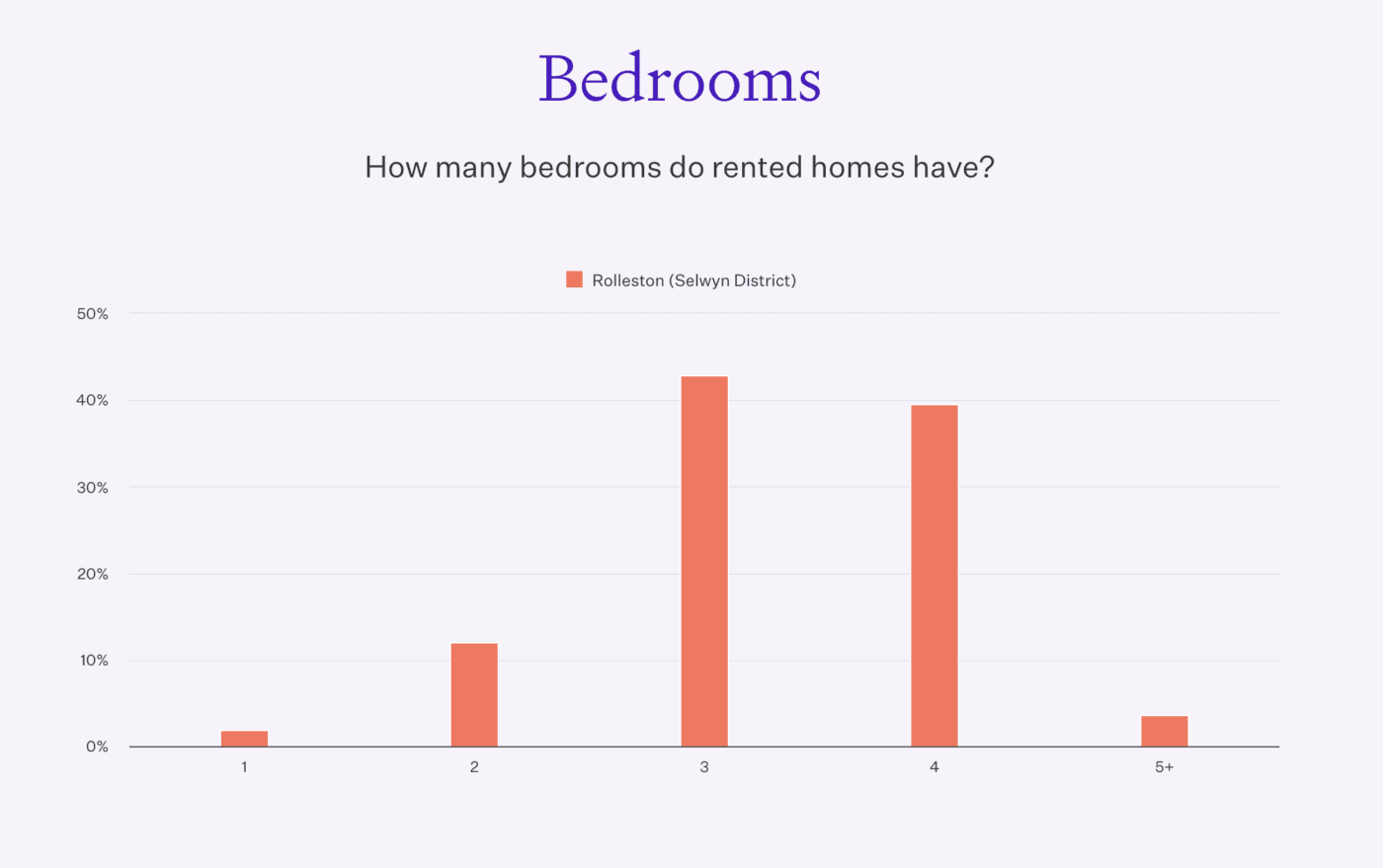
But Addington, a more inner-city suburb in Christchurch, looks different. Two-bedroom properties dominate the rental market.
Now, you need to ask yourself whether that’s because those are the properties renters genuinely want. Or, whether they live there because those are the properties that are available?
That's where I like to go a level deeper. I'll speak to local property managers and look at Trade Me's rental search data.
In this case, look at Trade Me's Rental Insights data from June 2026. It shows that more renters searched for 2-bedroom properties than any other number of rooms.
That tells me the demand isn't just being driven by what's available. It's a property type tenants are looking for.
A cheap property isn't automatically a good investment. Sometimes it's cheap because the ongoing costs are expensive.
Take a look at this standard 3-bed, 1-bath house I recently looked at in Mataura (May, 2026).
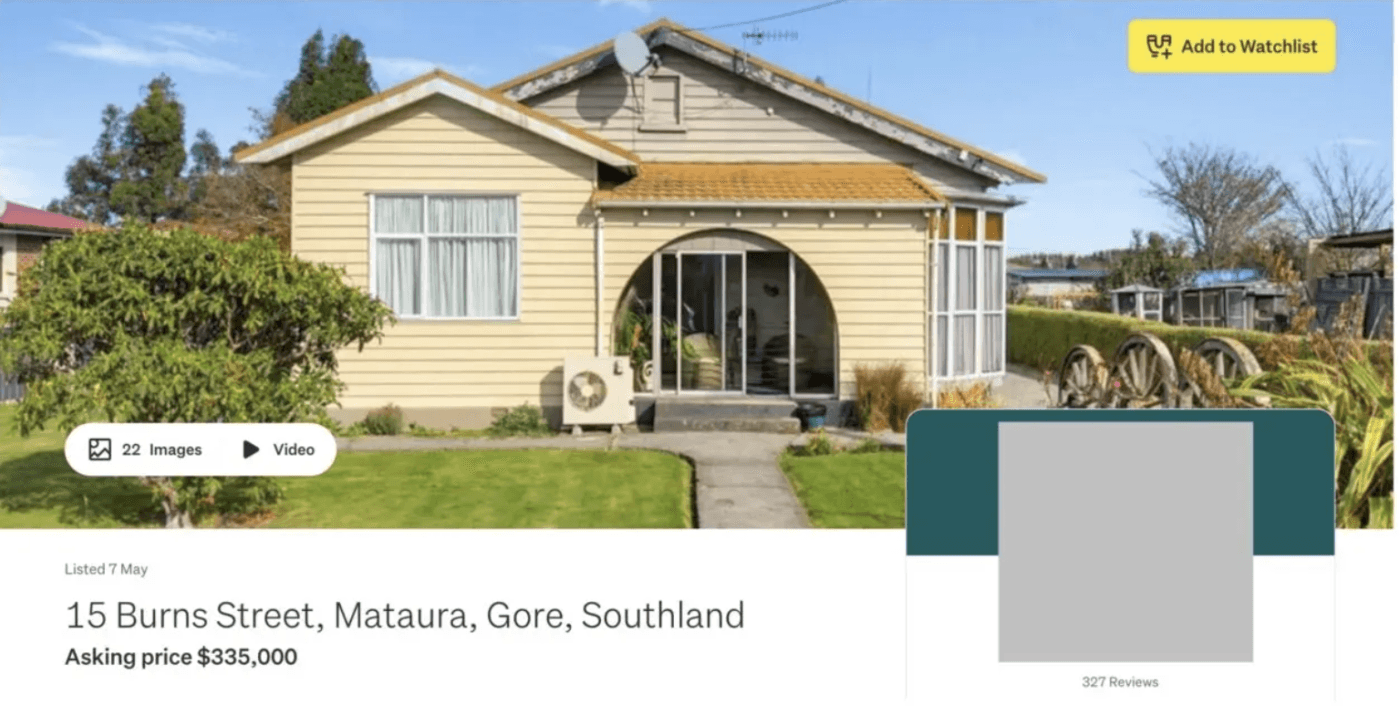
| Purchase price | $335,000 |
| Weekly rent | $495 |
| Gross yield | 7.7% |
At first glance, it’s got a reasonable 7.7% gross yield. That’s higher than the 4.5% national average.
And if you just looked at the back-of-the-envelope maths and only thought about the mortgage, this property would appear to pay its own way.
But in reality, there are lots of other costs to consider:
Once you account for the costs, that high yielding property is cashflow negative by about $136 a week. That’s assuming you’re using the No Cash Needed Method.
That doesn’t mean that all cashflow negative properties are bad. It’s to show you that a property might look like it has a high yield on the outside, but it might also have high costs.
This is why I pay much more attention to net yield than gross yield.
Gross yield ignores the ongoing costs of owning a property. Net yield tells you what's actually left after those costs are taken into account.
A cheap purchase price means very little if expensive maintenance wipes out your returns.
Once you know your strategy, choosing a property becomes surprisingly straightforward. And this is what investors tend to overlook the most, in my opinion.
Without a strategy, every listing looks interesting.
With one, you'll dismiss 95% of what's listed online within seconds because it simply doesn't fit.
That's what experienced investors do.
They don't try to find the perfect property, just a property that's perfect for their plan.
A good investment property is simply one that does the job you've bought it to do.
You could have the foundations of a sound investment if it:
So, before you head online and start scrolling, ask yourself one question first:
"What sort of investor am I trying to become?"
Once you know the answer, you'll stop hoping the right property jumps out at you.
You'll know exactly what you're looking for. And just as importantly, what to ignore.
Financial adviser for 3+ years. Helped nearly 500 Kiwis buy property.
Dennis joined the Opes Group back in 2017, and he’s now one of the longest-serving team members. He’s met with thousands of Kiwis to talk about their financial goals and has helped close to 500 of them become property investors.
This article is for your general information. It’s not financial advice. See here for details about our Financial Advice Provider Disclosure. So Opes isn’t telling you what to do with your own money.
We’ve made every effort to make sure the information is accurate. But we occasionally get the odd fact wrong. Make sure you do your own research or talk to a financial adviser before making any investment decisions.
You might like to use us or another financial adviser