
Mortgages
Interest Rate Report: September, 2026
The OCR went up. Are mortgage rates next?
Mortgages
3 min read
Here is your monthly interest rate report.
This gives you a quick, plain English update on how much your mortgage costs.
TL;DR
Here’s how interest rates changed over the last month
The short-term (1 & 2-year) mortgage interest rates barely budged over the last month.
But, surprisingly, the longer-term rates have started to fall.
TSB dropped its five-year rate by 0.4% last week.
BNZ did the same in late February.
That’s an interesting shift. Last month, it looked like rates were heading up. Now the picture is messier.
Some rates have increased, others have decreased. Others haven’t moved at all.
Which brings me to the topic on every investor’s mind right now: the war in Iran.
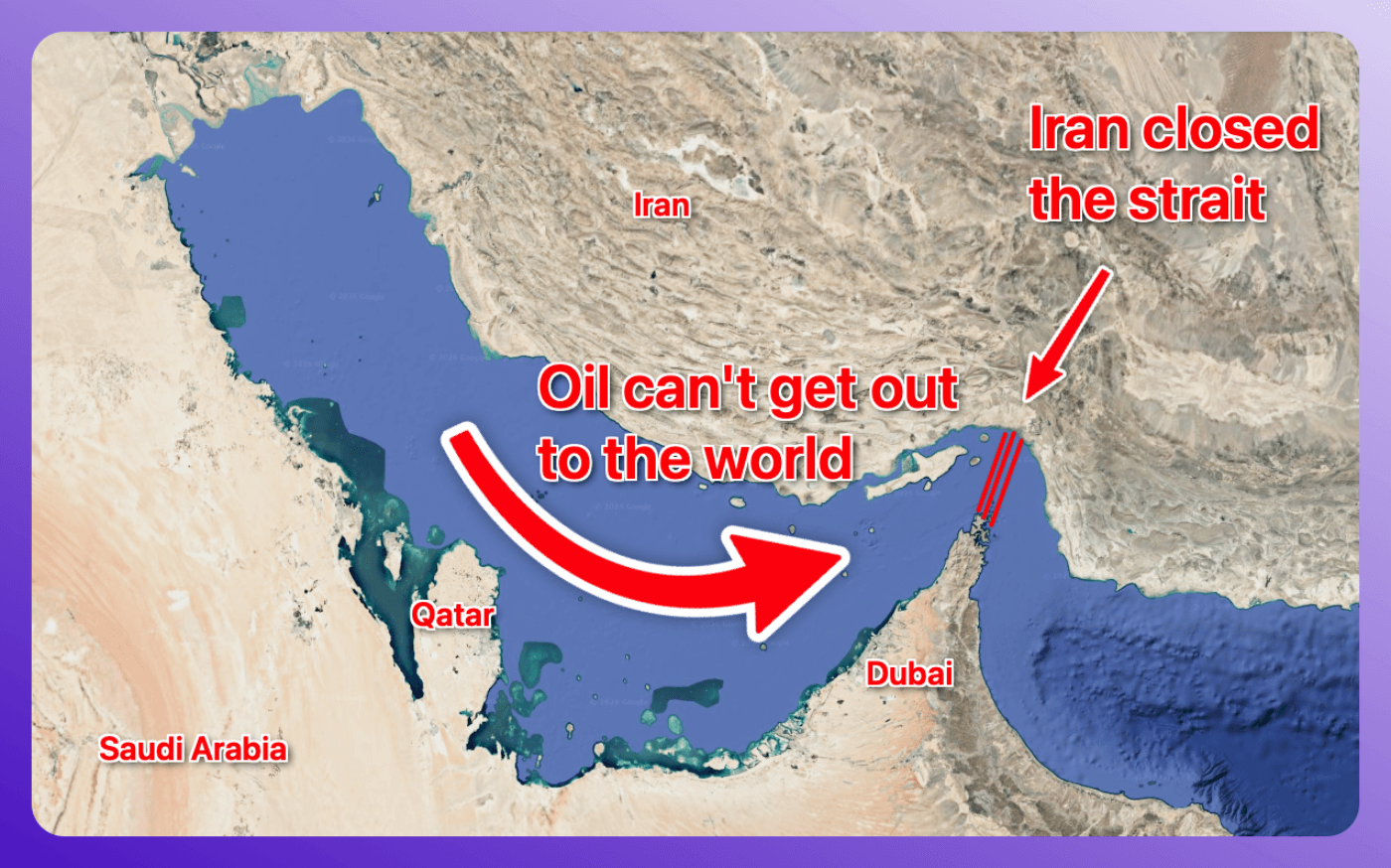
The US and Israel's strike on Iran is increasing the price of oil. That’s because Iran has effectively closed the Strait of Hormuz.
This is a narrow waterway that about 20% of the world’s oil passes through.
That means a whole heap of the world’s oil supply is stuck. It can’t get out to the rest of the world.
Demand for oil hasn’t changed. But there’s less supply.
Which is why you might have noticed those higher prices at the petrol pump. But those higher oil prices flow through the whole economy:
The risk is that this creates more inflation. And if inflation rises, the Reserve Bank may need to hike interest rates. That could make your mortgage more expensive.
And that is why the market is currently pricing in two OCR increases for 2026. That’s up from the one, which is what I talked about last month.
One of my clients emailed me about their friend. They’d been told by their mortgage adviser to fix for five years because of the conflict.
The logic being: lock in now before rates go higher.
I understand the instinct. But I see it differently. Because it’s not true that higher inflation always means a higher OCR.
For instance, over the last year, inflation went from 2.2% to 3.1% (it went up).
But the OCR went down over 2%. That’s not what we’re used to.
Aren’t interest rates meant to go up when inflation rises?
The Reserve Bank is not only concerned by where inflation is today. They look at where inflation might go in the future.
So if they think the inflation will go away soon, they don’t necessarily hike interest rates.
The most recent inflation numbers are a good example. Inflation rose because local councils hiked rates, and insurance companies hiked premiums. Raising the OCR wouldn’t impact that at all.
So rates have still come down because the Reserve Bank is ‘looking through’ that inflation.
Every $10 USD increase in the price of oil leads to roughly 0.1 – 0.2% of inflation in NZ. That’s according to Westpac.
We’re up about $20 USD a barrel right now. That means an extra 0.2 – 0.4% of inflation.
(Though, keep in mind that the price of oil changes several times a minute.)
Westpac’s view is that the Reserve Bank would likely “look through” this inflation.
After all, raising interest rates in NZ won’t open the Strait of Hormuz back up.
As their chief economist, Kelly Eckhold put it, the typical central bank playbook is to downplay the immediate impact on inflation. That is, unless it starts flowing through to inflation expectations.
In other words, they won’t rush to hike rates just because the price of oil spiked.
The Reserve Bank will likely balance inflation against New Zealand’s fragile economy.
The risks go both ways. If this conflict damages the economies we export to – particularly in Asia – then our economy weakens. Then the Reserve Bank might need to keep rates lower for longer, not higher.
So it’s not a one-way bet toward higher rates.
That’s why I’m not personally rushing to lock in my mortgage for five years.
That doesn’t mean fixing for longer is wrong for you. If certainty matters more than chasing the lowest rate, talk to your mortgage adviser.

Mortgage broker for over 10 years, property investor and Managing Director at Opes Mortgages
Peter Norris, a certified mortgage adviser with 10+ years of experience, serves as the Managing Director at Opes Mortgages. Having facilitated over $1.2 billion in lending for 2000+ clients, Peter is a respected authority in property financing. He's a frequent writer for Informed Investor Magazine and Property Investor Magazine, while also being recognized as BNZ Mortgage Adviser of the Year in 2018 and listed among NZ Adviser's top advisers in 2022, showcasing his expertise.
This article is for your general information. It’s not financial advice. See here for details about our Financial Advice Provider Disclosure. So Opes isn’t telling you what to do with your own money.
We’ve made every effort to make sure the information is accurate. But we occasionally get the odd fact wrong. Make sure you do your own research or talk to a financial adviser before making any investment decisions.
You might like to use us or another financial adviser