
Property Investment
What is your dream retirement?
Half of Kiwis don’t have a retirement plan. I think I know why. So, next week, I’m doing something about it. Here’s what we’re launching 👇
3 min read


Author: Andrew Nicol
Founder, 20+ Years' Experience Investing In Property, Author & Host
Just as property prices begin to rise … it’s the rental market’s turn to face challenges.
A net 22% of landlords say it’s tough to find good tenants right now.
So, investors need to ask themselves: "What are tenants really looking for?"
To answer this, I hit up the team at realestate.co.nz.
4 million renters a month search for properties on their website.
So, their data shows what tenants actually search for.
Here are the 4 big takeaways.
In Christchurch, properties that rent for $450 - $600 a week are the thickest part of the market.
So, if you rent your property in the middle of the market – it’s more likely to show up when tenants are looking for houses.
This trend appears again and again in other cities.
If you want access to the biggest group of tenants, most are looking for mid-range properties.
In cities like Auckland, some suburbs lend their name to a wider area.
For instance, Albany is a suburb. But, people often use it to refer to a wider area on the North Shore.
The same goes for Howick in East Auckland.
These ‘name-brand’ suburbs get more searches than those directly next to them.
Over the last 9 months, tenants searched 124,000 times for rentals in Howick.
But right next door, in Mellons Bay, only 16,500 people searched for rentals.
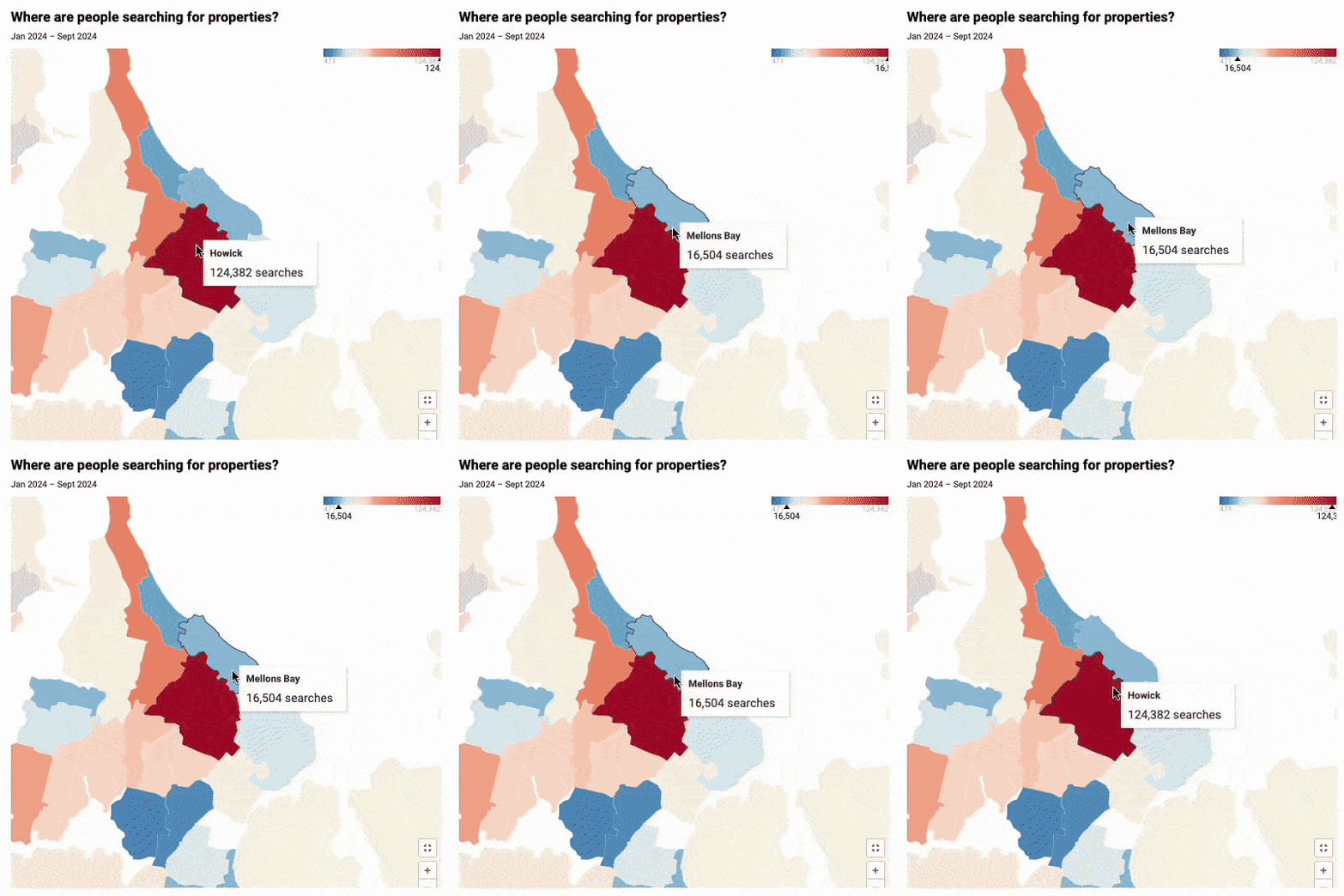
If you’re struggling to rent your property in Mellons Bay, you could also create a listing in Howick.
I thought the data would show that lots of tenants are looking for a 3-bedroom house with a bit of land. And then they compromise … and rent a cheaper property.
We don’t see that in the data.
Let’s look at Palmerston North.
Apartments make up 8% of the rental listings. But they make up 20% of the searches. That’s if tenants have specified the type of property they want.
So, there is seemingly low supply and higher demand.
It’s the same for townhouses and units.
But houses are the other way around. The % of listings outweighs the % of rental searches.
Now, you have to be careful with these specific numbers. They only include the searches where people have said what type of property they want.
Let’s say you’re searching for a rental property in a rural town like Tokoroa.
Houses make up most of the rental listings. So you don’t need to put into the search filters that you want a house. They’re all houses, anyway.
But if you want a townhouse. Well, there aren’t many in Tokoroa. So you’d have to put ‘townhouse’ in your search criteria.
That could be skewing the numbers.
Nonetheless, this data could provide an opportunity for investors. You might buy other property types (not houses) if demand is strong, but supply is low.
Don’t make the mistake of thinking: “Fewer people are looking for rentals in my suburb. So that’s a bad investment.”
We also need to think about demand and supply.
Take Wellington. Over the last 9 months, tenants have searched 26,000 times for rentals in Stokes Valley. But there were also 25 rental listings.
That’s an average of 1,040 searches per listing.
On the other hand, Elsdon had fewer searches. Just, 16,600.
But there were only 2 rental listings!
That averages 8,300 searches per rental listing.
So, the demand per listing is higher. That could mean your investment property rents faster.
The key message is, don’t assume you know what tenants want.
Whether it’s this search data or our updated Tenant Tool.
Use data to uncover hidden demand. Maybe tenants are looking for townhouses or apartments in traditionally house-heavy areas.
Choosing properties that tenants want means investors can potentially find a tenant faster.
Founder, 20+ Years' Experience Investing In Property, Author & Host
Andrew Nicol, Managing Director at Opes Partners, is a seasoned financial adviser and property investment expert with 20+ years of experience. With 40 investment properties, he hosts the Property Academy Podcast, co-authored 'Wealth Plan' with Ed Mcknight, and has helped 1,894 Kiwis achieve financial security through property investment.
This article is for your general information. It’s not financial advice. See here for details about our Financial Advice Provider Disclosure. So Opes isn’t telling you what to do with your own money.
We’ve made every effort to make sure the information is accurate. But we occasionally get the odd fact wrong. Make sure you do your own research or talk to a financial adviser before making any investment decisions.
You might like to use us or another financial adviser


