Property Investment
Vacancy rates: How long does it take to find a tenant?
Vacancy is how long your property will be without a tenant. There are two instances of when this will happen. Here's what property investors need to know.
Property Investment
7 min read


Author: Jess James-Davies
Business Development Manager with over 5 years of experience in Property Management in Auckland.
Reviewed by: Tiffany Bracey
Property Manager Team Leader at Opes Property Management Auckland.
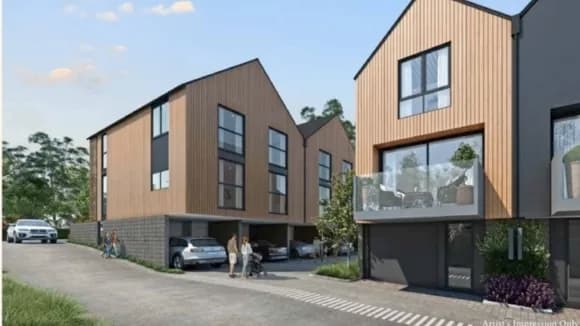
It can take longer to rent a property in a large New Build development … at least at first.
After all, once a project is finished a whole heap of identical properties might hit the rental market at the same time, all looking for a tenant.
To tackle this we at Opes Property Management have introduced Vacancy Protection.
This decreases your risk as a property investor in some of the developments we rent.
In this article you’ll learn what Vacancy Protection is, how it works, who pays for it, and what it means for you.
Vacancy Protection is a safety net for some New Build investors, covering extra vacancy beyond six weeks when a property takes longer to rent.
Here at Opes Property Management we tell investors to expect 6 weeks of not having a tenant. That’s when they’re renting a New Build property in Auckland for the first time.
We track this too. We aim for 70% of Auckland investors to meet that standard and have a tenant move in and start paying rent within 6 weeks.
But that still means around 30% might be without a tenant for more than 6 weeks.
Vacancy Protection helps cover the risk for those investors.
So, if your development has Vacancy Protection, and your property takes longer than 6 weeks to rent, the developer starts paying that rent.
There are some Terms and Conditions, which we’ll walk through, but it’s effectively a 10-week safety net.
The developer will pay the rent for up to 10 weeks if your property takes longer to rent.
Let’s say you:
The developer finishes building the property, and we list the property online and start looking for tenants. After 4 weeks we get a tenant and they sign the contract, but they can’t move in for 4 weeks.
That means there’s 8 weeks from the time you settle (pay for) the property, through to the tenant moving in and starting to pay rent.
That’s 2 weeks over our 6-week standard, so the developer will pay you 2 weeks’ rent.
The lower band of the rental appraisal is $660 per week, so you as the investor will be paid $1,320 by the developer to top you up.
Not everyone can get Vacancy Protection. It’s designed for the small number of investors who face that longer-than-normal vacancy.
You can get Vacancy Protection when:
In most developments, most owners shouldn’t need it. That’s because we aim for most investors to rent their property with 6 weeks of vacancy or less.
But it will make a big difference for those investors who’s properties stay on the rental market longer.
It’s a small change, but one that can make a meaningful difference for investors who need it.
Let’s say there is an Auckland development with 20 units. Often there is a pattern:
Here is a real example:
A good example of this pattern playing out is Brady Road in Otahuhu.
This development had 8 townhouses; 7 of them rented within our 6-week expectation:
Under Vacancy Protection that investor would have received $2,020 from the developer. That would cover the extra weeks of vacancy beyond Week 6.
So why did that last unit take longer? Was it a shoddy unit? Not at all.
Right now, the Auckland rental market is a little slower. Sometimes it’s genuine bad luck. One tenant might sign up to rent a property and then pull out at the last minute.
In other scenarios a good tenant might want to move in, but they might need 4-6 weeks before they can shift.
That’s why we have Vacancy Protection.
Every investor (should) know that some vacancy is normal and expected. If you buy a house you probably won’t have a tenant move in straight away.
So Vacancy Protection is designed to balance the risks between the investor and the developer. Investors still accept they may not have a tenant straight away.
But the developer also accepts that if the property is in a big development, a few investors might have a bit more vacancy.
At the same time, the protection needs an end point.
It wouldn’t be good if an investor could leave their property empty forever and collect ‘rent’ from the developer.
Capping it at 16 weeks keeps things fair. That way the investor, the developer and the property manager are motivated to find a good tenant.
On the surface, forking out for up to 10 weeks of vacancy sounds expensive. For example, at $650 a week, that’s a potential $6,500 cost.
So why do developers agree to it?
Well, there are two practical reasons:
Developers want to make their properties stand out.
Offering Vacancy Protection gives investors a bit more confidence. So perhaps more investors will buy properties if they have Vacancy Protection.
While Vacancy Protection can cover up to 10 weeks’ rent, developers know that:
So they can offer it to every buyer, even though only a few will ultimately use it. But all investors still get that reassurance.
Right now Vacancy Protection is only available for properties bought through Opes in Auckland. It currently doesn’t apply to properties in the rest of the country.
That’s because the Auckland rental market is slower and the Christchurch rental market is more stable.
So at the time of writing Auckland has more need for Vacancy Protection than other parts of the country, so it’s the right place to introduce and test this programme.
Vacancy Protection only applies if you use Opes Property Management as your property manager. That’s for 2 reasons:
Remember, it’s the developer who pays for the Vacancy Protection. And it applies when a developer works with Opes to find investors for properties.
Because there is a relationship there, they can hold Opes Property Management accountable if we get slack at finding tenants.
They can’t do that the same way with an external property manager.
Because investors know they have a maximum six-week downside, they’re less likely to panic and accept a below-market rent just to get someone in.
That keeps the entire development more stable and protects long-term returns.
To get Vacancy Protection you need to invest in a property offering it. Specifically those are:
Want to know if a development includes Vacancy Protection? Check your property pack or ask your financial adviser.
Business Development Manager with over 5 years of experience in Property Management in Auckland.
Jess Knight is the Business Development Manager at Opes Property Management in Auckland. She has over five years of industry experience and is also an experienced property investor.
This article is for your general information. It’s not financial advice. See here for details about our Financial Advice Provider Disclosure. So Opes isn’t telling you what to do with your own money.
We’ve made every effort to make sure the information is accurate. But we occasionally get the odd fact wrong. Make sure you do your own research or talk to a financial adviser before making any investment decisions.
You might like to use us or another financial adviser