Property Investment
Property investment NZ – The epic guide to property investment
Explore the latest in NZ property investment with our comprehensive 2026 guide. Gain insights into strategies and detailed steps for success.
Property Investment
6 min read

Author: Andrew Nicol
Founder, 20+ Years' Experience Investing In Property, Author & Host
Reviewed by: Ed McKnight
Resident Economist, with a GradDipEcon and over five years at Opes Partners, is a trusted contributor to NZ Property Investor, Informed Investor, Stuff, Business Desk, and OneRoof.
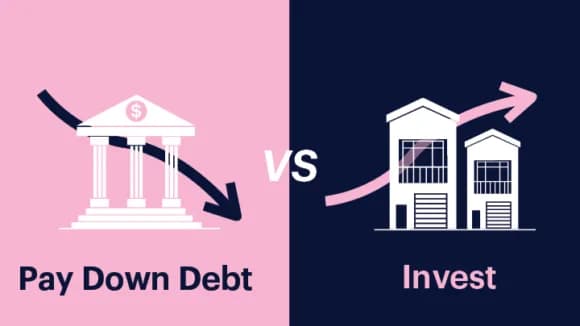
Investing in property will often build more wealth than paying off debt. But paying off your mortgage is usually lower risk.
But there are trade-offs. Which is why if you’ve got a hefty mortgage and also want to build wealth for retirement, you might ask:
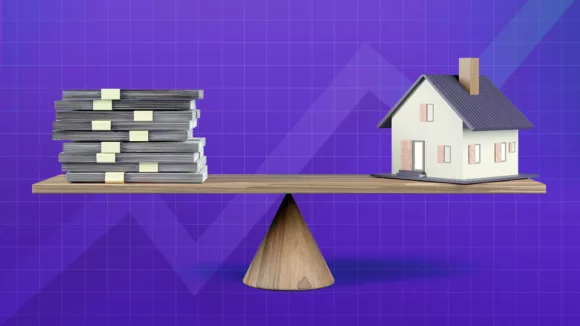
“Should I pay down the mortgage? Or use some of that money to buy an investment property?”
Just keep in mind that here at Opes Partners, we help people invest in property. So, there’s an incentive for me to say: “Investing wins. Case closed.”
But that’s not what I’m going to do.
Instead, I’ll show you the numbers as clearly as possible. That includes the pros and cons of investing. Then I’ll take a step back so you can decide which is the right move for you.
| Pay down the mortgage | Invest in property | |
| What you do | Put spare money into your home loan | Keep paying the home loan. But use spare cash to buy an investment property |
| Pros | More certainty. You reduce your debt and save on interest costs | Higher potential return through capital growth and long-term cashflow |
| Cons | Usually, lower long-term wealth potential | More risk; more debt, extra costs, and property values can fall |
| Best suited to | People close to retirement, risk-averse investors, or those who can’t borrow to invest yet | People with time, income, equity, and the appetite for risk |
Investing can build more wealth than paying down the mortgage, but paying down debt gives you more certainty and less risk.
Let’s say you have a $600,000 home loan, which you’re paying off over 30 years.
Your minimum repayment is just over $700 a week. (Based on a 4.69% interest rate).
But let’s say you have an extra $150 a week. You’re considering whether to use that money to pay off the mortgage faster or buy an investment property.
Let’s look at the two scenarios.
If you put that $150 a week into your mortgage you’d shave 9 years off your loan term.
In 15 years, you’d have an extra $169,666 in equity. That’s the extra amount you’d have paid off your mortgage.
If you left your mortgage on a 30-year term, you could potentially buy an investment property. This is where you borrow the deposit for an investment property against your own home.
Then you use that $150 a week to “top up” the investment property. This is because the rent might not cover all of the costs of owning the investment, at least at the start.
So, let’s say you purchase a $620,000 Christchurch townhouse, which you assume will increase in value by 5% a year.
The same $150 a week invested in this property would generate an extra $668,935 in equity after 15 years.
So, investing in property is forecast to return 3.5x as much as paying down your mortgage.
But that doesn’t mean the answer is simply, “always buy the investment property”.
The real question is whether you have the cashflow, income, and risk tolerance to hold the extra debt over the long term.
| Factor | Pay Down Mortgage | Invest in Property |
| Estimated increase in equity over 15 years | $169,666 | $668,935 |
| Return certainty | More certain | Less certain |
| Risk level | Lower | Higher |
| More suitable for | People with a lower risk tolerance or nearer retirement | People who are 30–55 (further away from retirement), with a higher risk tolerance |
| Outcome | Less debt | A new asset and the potential for capital growth |
A lot of Kiwis feel like they should pay off their own mortgage before they even think about investing.
And that can make sense. After all, getting mortgage-free is the dream for many of us. It means security, freedom, and knowing the bank no longer has a claim over your home.
So, if you’ve got a 30-year mortgage, it’s natural to think: “I’ll pay this off first, then I’ll start investing.”
And while that option is often thought of as lower risk, it doesn’t mean it’s risk-free.
One fishhook I see is that an investor spends 20 or 30 years paying down their mortgage and can still end up ‘broke rich’.
“Broke rich” is when you look wealthy on paper, but don’t have much freedom in real life.
For example, you might own a $1.5 million house with no mortgage. That sounds great. But if you don’t have savings, shares, or other investments, all your wealth is tied up in the home you live in.
That can make you asset-rich but cash-poor. Your net worth looks strong, but it doesn’t help pay for groceries, holidays, or retirement.
That’s because your home is usually a lifestyle asset, not an income-producing one. It may go up in value, but unless you sell it, that gain doesn’t fund your life. And if you do sell, you still need somewhere else to live.
Whereas if you have rental properties or other investments, you can sell them to live on.
Let’s say you currently have a $500,000 home loan. You’re paying it off over 20 years at a 5% interest rate. So, your minimum weekly payment is $761 a week.
You’ve got an extra $200 a week. And you’re thinking about your retirement. Here are your two scenarios:
What happens if you pay off your mortgage over 20 years and use the extra $200 a week to invest (at a consistent 7% return)?
In 20 years, you’d have a mortgage-free house and $453,348.
Your alternative is to use that extra $200 a week to pay down the mortgage. That means you’d be mortgage-free over 6 years earlier. Then you could invest both that $200 a week and your $761 mortgage payment.
That means saving $961 a week for over 6 years.
If you did this, then after 20 years, you would have a mortgage-free house and $381,407. Again, assuming that consistent 7% return.
Scenario #1 can mean that you end up with more money. That happens if your investment return is higher than your mortgage interest rate.
Just keep in mind that your returns can go up and down. Whereas your mortgage interest rate is often more stable.
So, investing won’t always win. But, based on historical averages, it does in this scenario.
| Invest | Pay off Mortgage | |
| Mortgage | $500k | $500k |
| Interest rate | 5% | 5% |
| Years to pay off mortgage | 20 | 13.9 |
| Weekly payment | $761 | $961 |
| Years invested | 20 | 6.1 |
| Investment amount (per week) | $200 | $961 |
| Investment growth | 7% | 7% |
| FInal position | Mortgage-free house and $453,348 | Mortgage-free house and $381,407 |
Paying down your mortgage and investing are both ways to improve your financial position.
But they work in different ways.
Paying down your mortgage gives you a more certain return. Every extra dollar you pay off your loan reduces your debt and lowers the interest you’ll pay over time.
Investing can give you a higher return. But that return is not guaranteed. Property values can fall, interest rates can rise, and you may need to keep topping up the investment.
| Pay down your mortgage faster | Invest in property | |
| Pros | More certain return Your debt goes down You pay less interest in the future You become mortgage-free sooner Often feels safer | Higher potential return You build wealth outside your own home You benefit if the property grows in value Rent can help cover some costs Can help fund retirement |
| Cons | Usually lower long-term return Your wealth may stay tied up in your home It doesn’t create extra income You may start investing later You could become “broke rich” | Returns are not guaranteed You take on more debt Property values can fall or stay flat You may need to top up the property More moving parts and more risk |
Not sure if it’s a better idea to pay off debt or invest? Here’s one way to think about it.
If the bank won’t lend you the money, you don’t have enough equity, or the thought of more debt makes you feel sick … focus on the mortgage.
Every extra dollar you put into the mortgage reduces your debt, builds your equity, and gets you closer to being ready to invest later.
The same goes if you’re close to retirement.
If you’re 5 years away from stopping work, the last thing you may want is mortgage repayments following you into retirement.
But if you’re 30–55, have decent equity, a stable income, and still need to build wealth for retirement … then only paying down the mortgage could hold you back.
Yes, a mortgage-free home is a great achievement. But it’s not a retirement plan.
You can’t eat your house. And you can own a $1.5 million home, have no mortgage, and still feel broke if you don’t have income-producing assets outside it.
As a general rule of thumb, pay down the mortgage if you want certainty. Invest if you prefer growth.
Plug in your mortgage balance, interest rate, and what you could invest - and the calculator will show you which strategy puts you further ahead over time.
Compare pay down debt vs investFounder, 20+ Years' Experience Investing In Property, Author & Host
Andrew Nicol, Managing Director at Opes Partners, is a seasoned financial adviser and property investment expert with 20+ years of experience. With 40 investment properties, he hosts the Property Academy Podcast, co-authored 'Wealth Plan' with Ed Mcknight, and has helped 1,894 Kiwis achieve financial security through property investment.
This article is for your general information. It’s not financial advice. See here for details about our Financial Advice Provider Disclosure. So Opes isn’t telling you what to do with your own money.
We’ve made every effort to make sure the information is accurate. But we occasionally get the odd fact wrong. Make sure you do your own research or talk to a financial adviser before making any investment decisions.
You might like to use us or another financial adviser