New Builds
Do townhouses take longer to sell?
Learn how long townhouses take to sell. You’ll also learn whether the size of the development makes a difference.
Property Investment
4 min read

Author: Andrew Nicol
Founder, 20+ Years' Experience Investing In Property, Author & Host
Reviewed by: Ed McKnight
Resident Economist, with a GradDipEcon and over five years at Opes Partners, is a trusted contributor to NZ Property Investor, Informed Investor, Stuff, Business Desk, and OneRoof.
Opes Partners often recommends New Build houses, townhouses and dual-key apartments.
These are often located in Auckland, Christchurch, Canterbury, Hamilton, Dunedin and Queenstown.
The gross yields typically range from 4% to 6%.
But we only recommend each property type in areas that suit it.
A 2-bedroom townhouse won’t be as popular with tenants in a place like Rolleston or Pokeno. Standalone houses are more popular in those areas.
On the other hand, a standalone house might not be the right fit in Central Auckland. That’s because houses are often too expensive to be a good investment property.
So, in this article, you’ll learn the types of properties we recommend.
| Type | Growth vs Yield | Price | Target yield | Target capital growth | Locations |
| Townhouse | Growth | $519,000 - $1 million | 4% - 4.8% | 5% - 6% | Auckland, Christchurch, Hamilton, Dunedin, Queenstown |
| House | Growth | $669,000 – $899,000 | 4.25% - 4.5% | 5% | Canterbury, Kaiapoi, Rolleston |
| Dual-key townhouse | Yield | $725,000 – $999,000 | 6%+ | 3.5% - 4.5% | Auckland, Queenstown, Wellington |
The best investment property depends on your strategy. Townhouses and houses are typically better for capital growth, while dual-key properties are designed to maximise rental yield and cash flow.
Target purchase price: $519,000 up to $1 million
Locations: Auckland, Christchurch, Hamilton, Dunedin, Queenstown
Target Yield: 4% - 4.8%
Target Capital Growth: 5% - 6%
We often recommend townhouses in Auckland, Christchurch, and some other regional centres.
These townhouses typically have 2-4 bedrooms. That’s because properties with only 1 bedroom don’t tend to increase in value as fast by comparison.
Townhouses are considered growth properties. That’s because they are more likely to increase in value faster than yield-focused properties like apartments.
But the trade-off is that they are likely to have a lower rental yield.
Here are the prices of properties we tend to recommend.
The price must be balanced against the rental income an investor can expect to get:
| City | Property type | Price |
| Auckland | 2-bed | $600,000 - $800,000 |
| 3-bed | $700,000 - $1.2 million | |
| Christchurch | 2-bed | $550,000 - $700,000 |
| 3-bed | $700,000 - $900,000 |
The townhouses we recommend tend to have a gross yield of 4% - 4.8%, depending on where they are.
Property prices have recently fallen in New Zealand. So, right now, properties are more affordable. That’s why the gross yields of the properties we currently recommend are at the higher end of this range.
As part of creating your investment plan, you need to project how fast house prices will increase.
Outside Auckland, we typically use a capital growth rate of 5%. In Auckland, we use 6% per year.
These forecast rates are conservative. They are lower than how fast house prices have increased in the past. This is to be conservative when running the numbers on your investment property.
Here are the pros and cons of investing in a townhouse:
| Pros | Cons |
| More affordable Can purchase closer to the centre of the city Decent rental yield | Less land Increase slightly slower than houses Some investors fear an oversupply of townhouses They don’t always have a garage |
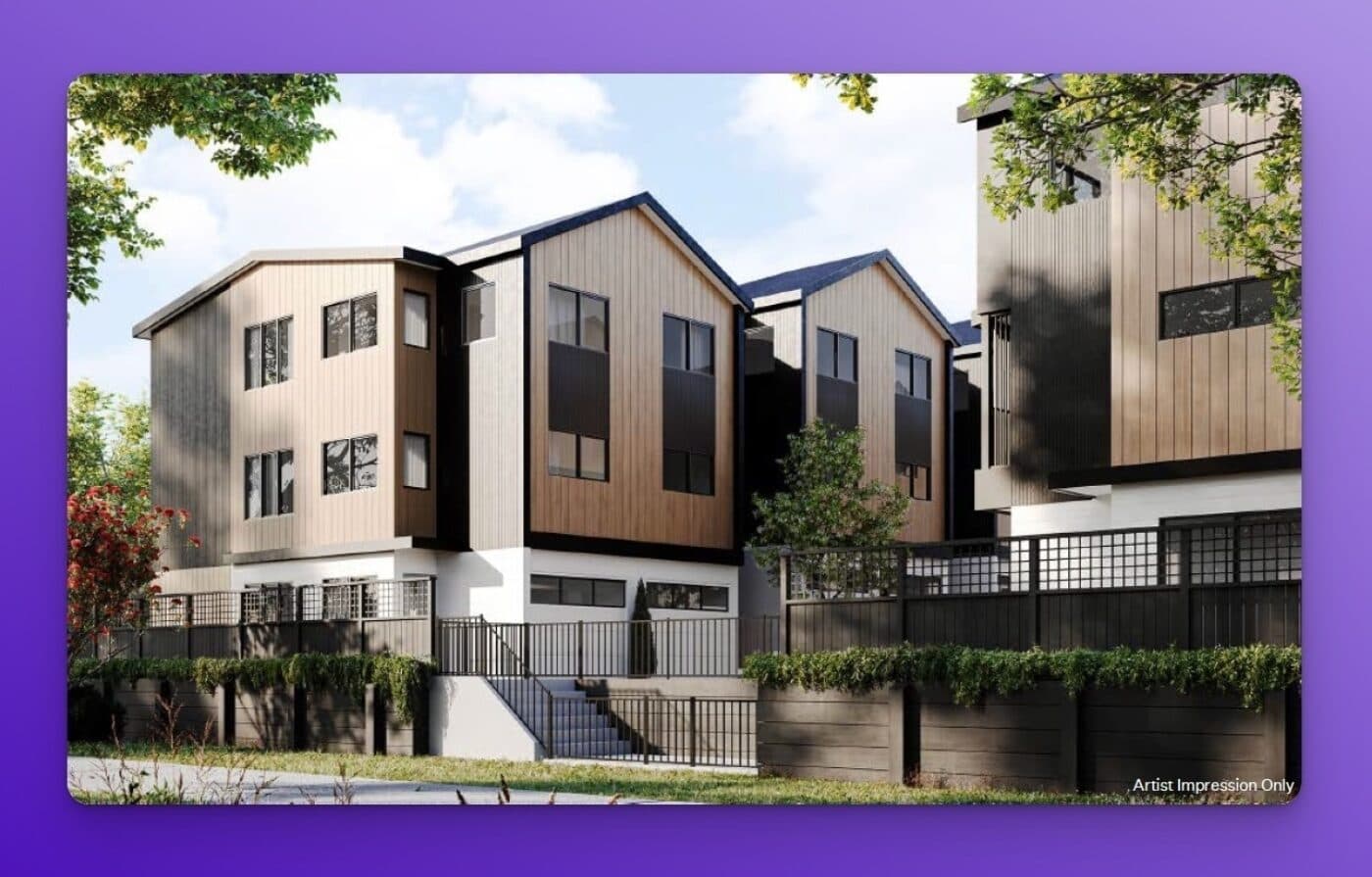
Here’s an example of the kind of townhouse we might recommend. This one is based in Glen Innes, Auckland.
This development included 18 three-bedroom homes with garages, priced at $849,000. The developer was Sandford Property Group.
Target purchase price: $669,000 – $899,000.
Locations: Canterbury
Target Yield: 4.25% - 4.5%.
Target Capital Growth: 5%
We also recommend standalone properties. These tend to be in Canterbury. That’s because Canterbury house prices are more affordable, so buying a standalone house isn’t as expensive as elsewhere in the country.
Our top places to invest in standalone houses are Kaiapoi, Belfast, Rolleston and Halswell in today’s market.
These houses usually have 3-4 bedrooms. That means they have enough space for a family to live in.
Standalone homes are also a growth property. That means they tend to increase in value faster than a property like an apartment.
But the trade-off is that they are likely to have a lower rental yield.
We target a rental yield between 4.25% - 4.5%. And project that standalone houses in Canterbury will increase by 5% per year.
Here are the prices of properties you can typically expect to see when you work with Opes Partners.
Again, the price is always balanced against the rental income a property investor can expect to get:
| CIty | Property type | Price |
| Canterbury | 3-bed | $669,000 - $750,000 |
| 4-bed | $750,000 - $899,000 |
But not everyone should buy a standalone house as an investment property. Here are the pros and cons:
| Pros | Cons |
More land More familiar investment (some people just feel more comfortable buying a house) More likely to attract families who stay longer | More expensive Further away from the centre of the city Often lower rental yield |
Here’s an example of a recent 4-bedroom standalone property that we recommended to an investor. It is based in Rolleston, and the developer is Oakridge Homes.
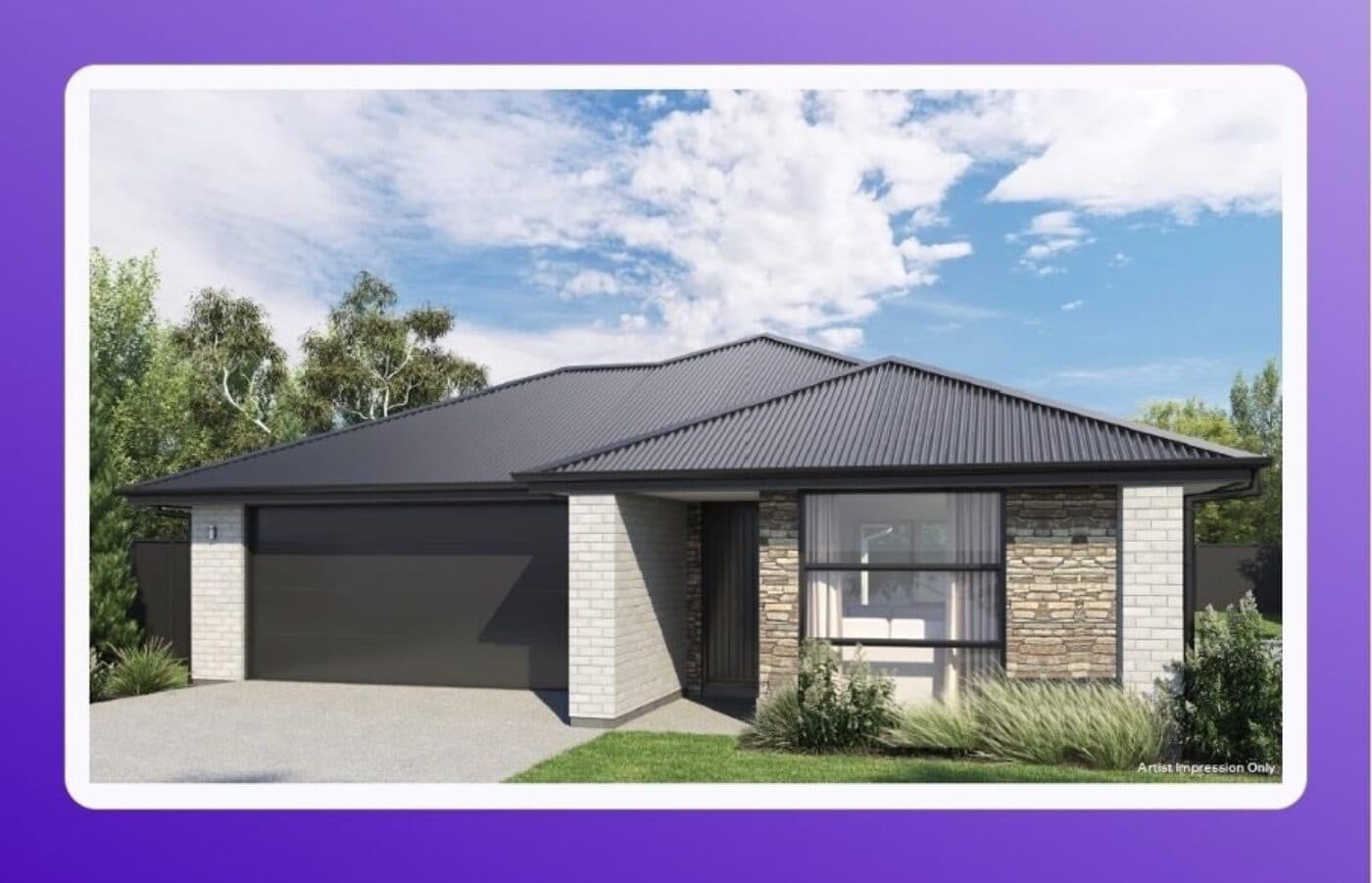
Target purchase price: $725,000 - $999,000
Locations: Auckland, Queenstown and Wellington
Target Yield: 6%+
Target Capital Growth: 3.5% - 4.5%
If you work with Opes, we might also recommend a dual-key townhouse. This will usually be in Auckland, Queenstown or Wellington.
The purchase prices are often between $725,000 - $999,000.
Dual keys are yield properties. They often have two units within the same property. This means that you can have 2 tenants within the same legal title.
That’s why they tend to generate stronger rent, but usually grow in value more slowly.
We target a 6% yield or higher for these properties.
And we project that the property will go up by 4.5% per year (on average) if purchasing in Auckland. This drops to 3.5% outside Auckland.
| Pros | Cons |
Higher rental yield Often in central locations Smoother rental income because you have 2 tenants | Less likely to increase in value as quickly More expensive to own and operate, i.e. higher maintenance costs. Won’t always have a carpark |
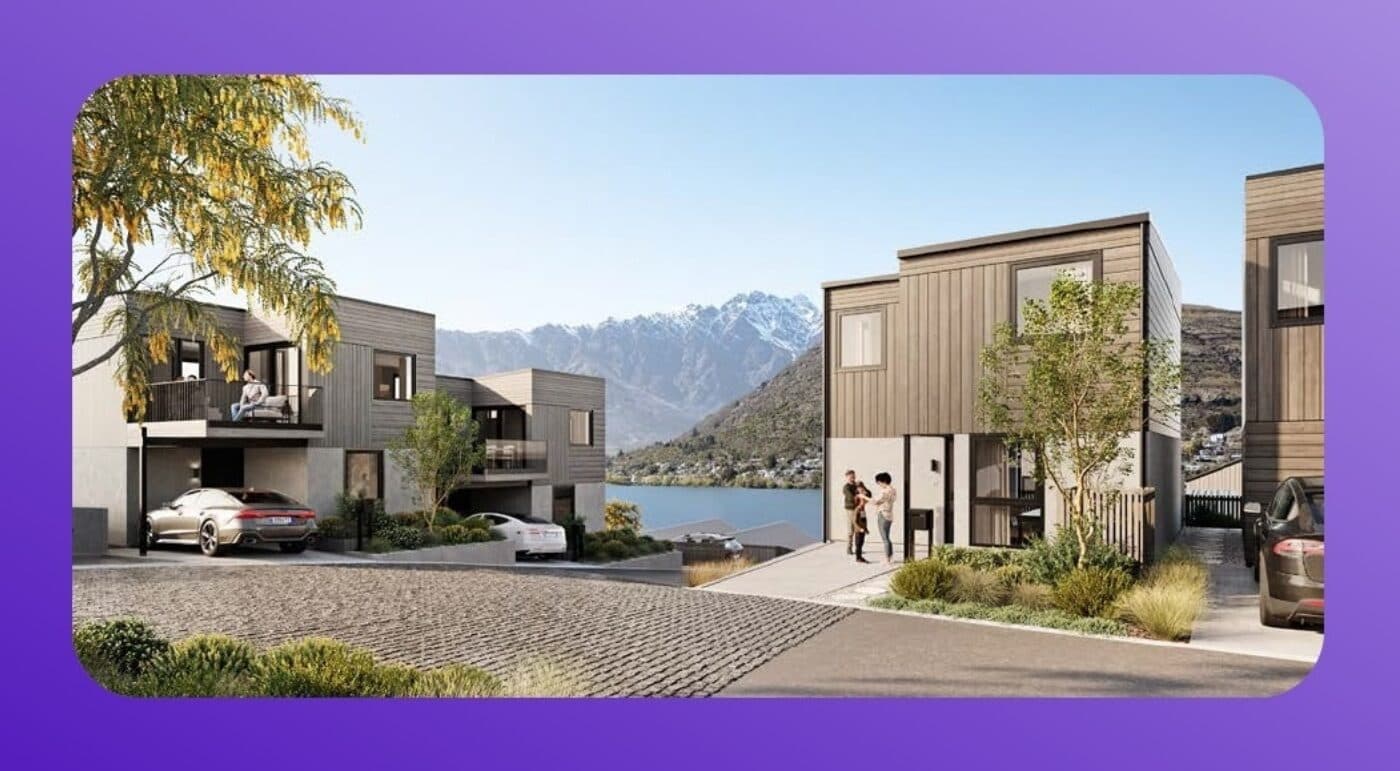
Here’s an example of the kind of dual-key property we might recommend. This development was in Queenstown. They were priced at around $729,000 and were expected to rent for $900-$960 a week.
You might notice that all 3 property types we recommend are usually New Builds. That is because Opes focuses on build-and-hold investors, rather than active renovators.
Property investors can either buy a New Build or an existing property.
And while we here at Opes focus on New Builds, that doesn’t mean buying a new one is right for you.
Here are the main differences between New Builds and existing properties:
| New Builds | Existing properties |
Hands-off strategy (low time, low effort) Less money required (20% deposit) Can't renovate to add value Often less land Often has Body Corporate or a Residents’ Association | Active, hands-on strategy (more time, more effort) More money required (30% deposit + renovation costs) Can renovate to add value Often more land |
Because we focus on New Builds, we tend to be a better fit for passive investors. These investors want to grow their wealth, but aren’t interested in renovating.
Therefore, if you want to renovate, add value, and take a more hands-on approach, another strategy may suit you better.
Founder, 20+ Years' Experience Investing In Property, Author & Host
Andrew Nicol, Managing Director at Opes Partners, is a seasoned financial adviser and property investment expert with 20+ years of experience. With 40 investment properties, he hosts the Property Academy Podcast, co-authored 'Wealth Plan' with Ed Mcknight, and has helped 1,894 Kiwis achieve financial security through property investment.
This article is for your general information. It’s not financial advice. See here for details about our Financial Advice Provider Disclosure. So Opes isn’t telling you what to do with your own money.
We’ve made every effort to make sure the information is accurate. But we occasionally get the odd fact wrong. Make sure you do your own research or talk to a financial adviser before making any investment decisions.
You might like to use us or another financial adviser